Dr. Cliff Talks About The Link Between Hearing Loss and Brain Health
Dr. Cliff Olson discusses research linking untreated hearing loss to increased dementia risk and faster cognitive decline, emphasizing early intervention's importance.
Integrate your CRM with other tools
Lorem ipsum dolor sit amet, consectetur adipiscing elit lobortis arcu enim urna adipiscing praesent velit viverra sit semper lorem eu cursus vel hendrerit elementum morbi curabitur etiam nibh justo, lorem aliquet donec sed sit mi dignissim at ante massa mattis.
- Neque sodales ut etiam sit amet nisl purus non tellus orci ac auctor
- Adipiscing elit ut aliquam purus sit amet viverra suspendisse potenti
- Mauris commodo quis imperdiet massa tincidunt nunc pulvinar
- Adipiscing elit ut aliquam purus sit amet viverra suspendisse potenti
How to connect your integrations to your CRM platform?
Vitae congue eu consequat ac felis placerat vestibulum lectus mauris ultrices cursus sit amet dictum sit amet justo donec enim diam porttitor lacus luctus accumsan tortor posuere praesent tristique magna sit amet purus gravida quis blandit turpis.

Techbit is the next-gen CRM platform designed for modern sales teams
At risus viverra adipiscing at in tellus integer feugiat nisl pretium fusce id velit ut tortor sagittis orci a scelerisque purus semper eget at lectus urna duis convallis. porta nibh venenatis cras sed felis eget neque laoreet suspendisse interdum consectetur libero id faucibus nisl donec pretium vulputate sapien nec sagittis aliquam nunc lobortis mattis aliquam faucibus purus in.
- Neque sodales ut etiam sit amet nisl purus non tellus orci ac auctor
- Adipiscing elit ut aliquam purus sit amet viverra suspendisse potenti venenatis
- Mauris commodo quis imperdiet massa at in tincidunt nunc pulvinar
- Adipiscing elit ut aliquam purus sit amet viverra suspendisse potenti consectetur
Why using the right CRM can make your team close more sales?
Nisi quis eleifend quam adipiscing vitae aliquet bibendum enim facilisis gravida neque. Velit euismod in pellentesque massa placerat volutpat lacus laoreet non curabitur gravida odio aenean sed adipiscing diam donec adipiscing tristique risus. amet est placerat.
“Nisi quis eleifend quam adipiscing vitae aliquet bibendum enim facilisis gravida neque velit euismod in pellentesque massa placerat.”
What other features would you like to see in our product?
Eget lorem dolor sed viverra ipsum nunc aliquet bibendum felis donec et odio pellentesque diam volutpat commodo sed egestas aliquam sem fringilla ut morbi tincidunt augue interdum velit euismod eu tincidunt tortor aliquam nulla facilisi aenean sed adipiscing diam donec adipiscing ut lectus arcu bibendum at varius vel pharetra nibh venenatis cras sed felis eget.
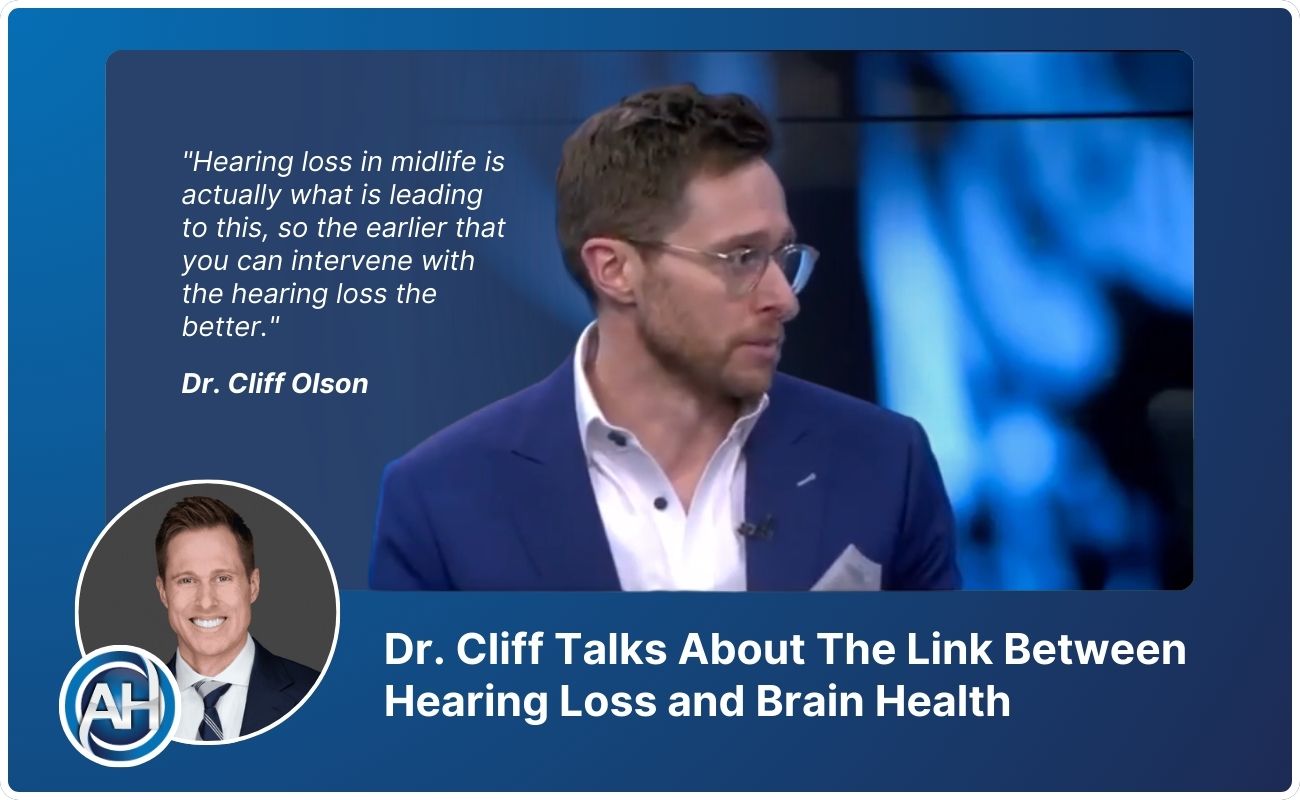
Dr. Clifford Olson recently appeared on AZ Family to discuss an aspect of hearing health that extends beyond communication difficulties. Research continues to reveal connections between untreated hearing loss and cognitive changes, including an increased risk for dementia. This growing body of evidence highlights why addressing hearing loss matters for overall brain health.
What Recent Research Reveals
The connection between hearing loss and dementia has strengthened considerably over recent years. Research from Johns Hopkins University in 2011 first identified that individuals with mild hearing loss were two times more likely to develop dementia compared to those with normal hearing. The risk increased with severity: moderate hearing loss showed three times the likelihood, and severe hearing loss indicated five times the risk.
More recently, the Framingham study conducted in November 2025 provided additional insights. This research identified that individuals with hearing loss experience faster brain atrophy. The study also found cognitive decline affecting not just memory, but executive function—the ability to focus, switch between tasks, and plan activities. Most significantly, the research showed a 71% higher risk for dementia among those with untreated hearing loss.
Recognizing the Early Signs
Many people dismiss early hearing changes as normal aging, but recognizing these signs early matters. Dr. Olson explained during the interview that the most common early indicator is "struggling hearing and understanding speech in background noise environments." People might notice they can hear that someone is talking in a restaurant but cannot comprehend the words clearly. Another sign is perceiving sound without clarity—hearing that someone is speaking but struggling to understand what they are saying.
Hearing loss often develops gradually in midlife, and this timing is significant. Research indicates that hearing loss during these middle years contributes to cognitive changes later in life, making early intervention particularly valuable. As Dr. Olson emphasized during the segment,
"Hearing loss in midlife is actually what is leading to this, so the earlier that you can intervene with the hearing loss the better."
The Role of Comprehensive Treatment
While hearing aids represent the primary treatment for hearing loss, research shows that not all hearing aid treatment produces the same outcomes. Studies like ACHIEVE and ENHANCE specifically examined patients who received hearing aids fitted using comprehensive audiologic best practices. The results from these studies demonstrate that proper fitting and programming protocols make a significant difference in outcomes.
Simply purchasing hearing aids and using manufacturer default settings does not provide the same level of benefit as treatment that includes verification procedures like Real Ear Measurement. At Applied Hearing Solutions, we follow our Applied360 fitting process, which includes multiple appointments over 45 days to ensure hearing aids are programmed precisely for each individual's hearing loss prescription. This comprehensive approach, rather than hearing aid ownership alone, appears to be the key factor in the positive outcomes observed in research.
While treating hearing loss appropriately may help mitigate cognitive decline risk, we want to be clear that this should not be viewed as guaranteed dementia prevention. The relationship between hearing and cognition is complex, and hearing aids are not a cure or definitive preventive measure for dementia. The primary reason to address hearing loss remains improving communication, quality of life, and daily function.
Addressing Common Concerns
Many people, particularly those in midlife, hesitate to address hearing concerns because of misconceptions about age and hearing loss. As Dr. Olson shared during the interview, hearing loss is not purely age-related. He experienced hearing loss at age 19 during his service in the United States Marine Corps. Modern hearing technology includes completely invisible options that address both functional needs and cosmetic concerns. As he noted,
"I could be wearing a hearing aid right now on camera, and no one would have a clue."
The evidence suggests that addressing hearing loss proactively, rather than waiting, offers the most benefit. If you have noticed difficulty understanding conversations in noisy environments, struggle with speech clarity, or find yourself frequently asking people to repeat themselves, these warrant professional evaluation.
Schedule Your Comprehensive Evaluation
We encourage you to schedule a comprehensive hearing evaluation with one of our audiologists. During your Applied360 Discover consultation, we will assess your hearing, discuss any concerns, and explain how our best practice fitting approach differs from basic hearing aid dispensing. This evaluation provides the information you need to make informed decisions about your hearing health.
Contact Applied Hearing Solutions to schedule your consultation and take the first step toward better hearing and long-term cognitive wellness.