How Altitude Affects Your Hearing on the Drive to Flagstaff
The drive from Phoenix to Flagstaff creates pressure changes that can affect hearing and hearing aid performance, especially for those with existing hearing loss.
Integrate your CRM with other tools
Lorem ipsum dolor sit amet, consectetur adipiscing elit lobortis arcu enim urna adipiscing praesent velit viverra sit semper lorem eu cursus vel hendrerit elementum morbi curabitur etiam nibh justo, lorem aliquet donec sed sit mi dignissim at ante massa mattis.
- Neque sodales ut etiam sit amet nisl purus non tellus orci ac auctor
- Adipiscing elit ut aliquam purus sit amet viverra suspendisse potenti
- Mauris commodo quis imperdiet massa tincidunt nunc pulvinar
- Adipiscing elit ut aliquam purus sit amet viverra suspendisse potenti
How to connect your integrations to your CRM platform?
Vitae congue eu consequat ac felis placerat vestibulum lectus mauris ultrices cursus sit amet dictum sit amet justo donec enim diam porttitor lacus luctus accumsan tortor posuere praesent tristique magna sit amet purus gravida quis blandit turpis.

Techbit is the next-gen CRM platform designed for modern sales teams
At risus viverra adipiscing at in tellus integer feugiat nisl pretium fusce id velit ut tortor sagittis orci a scelerisque purus semper eget at lectus urna duis convallis. porta nibh venenatis cras sed felis eget neque laoreet suspendisse interdum consectetur libero id faucibus nisl donec pretium vulputate sapien nec sagittis aliquam nunc lobortis mattis aliquam faucibus purus in.
- Neque sodales ut etiam sit amet nisl purus non tellus orci ac auctor
- Adipiscing elit ut aliquam purus sit amet viverra suspendisse potenti venenatis
- Mauris commodo quis imperdiet massa at in tincidunt nunc pulvinar
- Adipiscing elit ut aliquam purus sit amet viverra suspendisse potenti consectetur
Why using the right CRM can make your team close more sales?
Nisi quis eleifend quam adipiscing vitae aliquet bibendum enim facilisis gravida neque. Velit euismod in pellentesque massa placerat volutpat lacus laoreet non curabitur gravida odio aenean sed adipiscing diam donec adipiscing tristique risus. amet est placerat.
“Nisi quis eleifend quam adipiscing vitae aliquet bibendum enim facilisis gravida neque velit euismod in pellentesque massa placerat.”
What other features would you like to see in our product?
Eget lorem dolor sed viverra ipsum nunc aliquet bibendum felis donec et odio pellentesque diam volutpat commodo sed egestas aliquam sem fringilla ut morbi tincidunt augue interdum velit euismod eu tincidunt tortor aliquam nulla facilisi aenean sed adipiscing diam donec adipiscing ut lectus arcu bibendum at varius vel pharetra nibh venenatis cras sed felis eget.
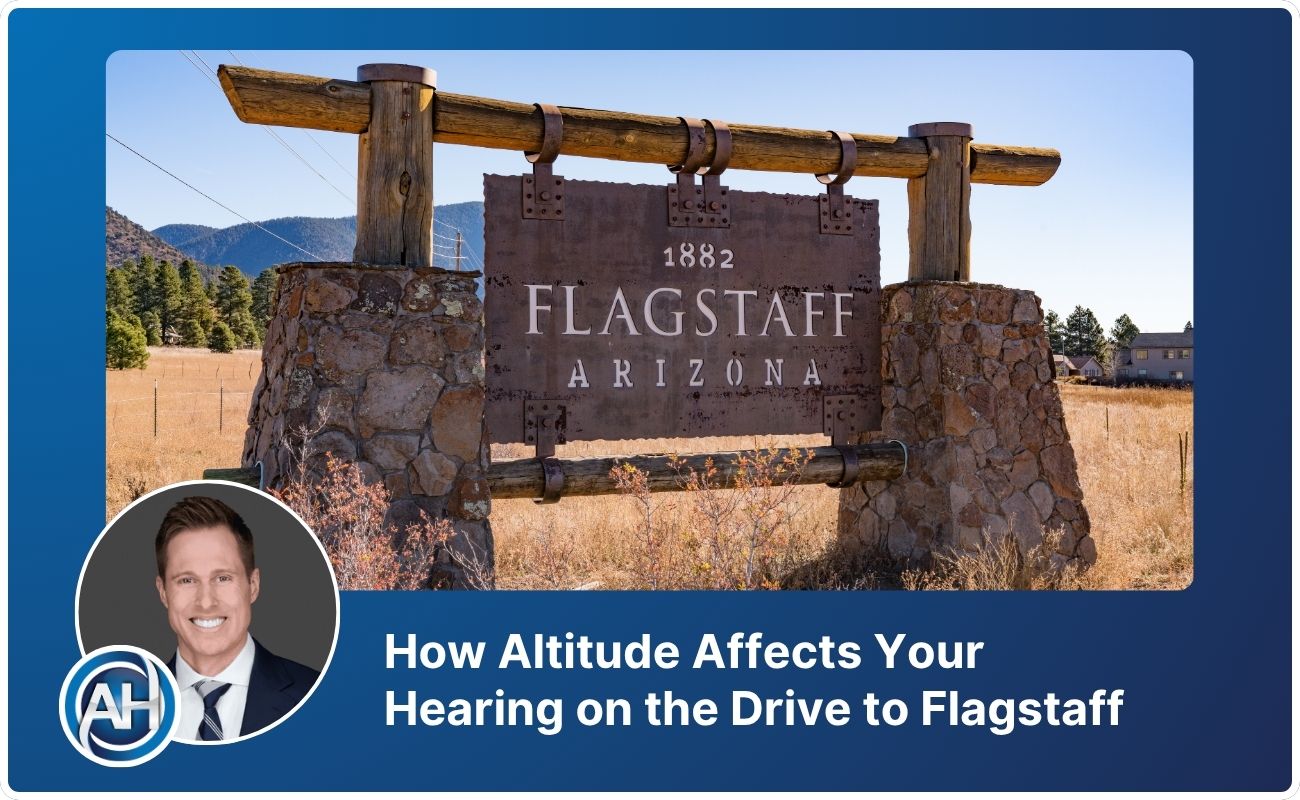
You leave Phoenix at sea-level-adjacent 1,100 feet, and less than two hours later you're standing in Flagstaff at 7,000 feet. Your ears usually notice before you do. That popping, muffled feeling isn't just annoying, it's your ears responding to a real physical change in pressure, and if you already have hearing loss or wear hearing aids, that change can feel more noticeable than it does for everyone else in the car.
Why Your Ears Feel Different Going Up in Elevation
Your middle ear is an air-filled space, and it needs the pressure inside to match the pressure outside. That balancing act happens through the eustachian tube, a small passage connecting your middle ear to the back of your throat. As you climb from the desert floor into the pines, outside air pressure drops. Your eustachian tube has to work to equalize things, and that's where the fullness, popping, or muffled hearing comes from.
Most people adjust within a few minutes. Swallowing, yawning, or chewing gum helps open the eustachian tube and lets air move through. But if you've had ear infections, allergies, or sinus issues, that tube may not open as easily, and the pressure change can linger longer or feel more uncomfortable.
Hearing Aids and Elevation Changes
Hearing aid wearers sometimes notice their devices sound different once they hit higher ground. Part of that is the same pressure shift affecting your ear canal and eardrum, and part of it is simply drier air. Flagstaff sits in a completely different climate zone than Phoenix, and lower humidity combined with lower air pressure can change how sound waves travel to the microphone and how comfortable the fit feels in your ear.
None of this damages your hearing aids. But if a device that normally fits securely starts to feel loose, or if you notice more whistling or feedback, that's often the altitude and humidity working together, not a malfunction.
Temperature Swings Matter Too
Flagstaff can be 20 to 30 degrees cooler than Phoenix, sometimes more in winter. Cold affects hearing aid batteries. Battery life drops faster in cold, dry mountain air than it does in the Phoenix heat, so a device that easily makes it through a full day at home might need a battery swap sooner on a Flagstaff trip. If you use rechargeable hearing aids, cold temperatures can also slow the charge, so it's worth giving them a bit of extra charging time before you head out.
What to Do If Your Ears Feel Blocked
A few things help most people move through the altitude change more comfortably:
- Swallow, yawn, or chew gum on the drive up, especially as you gain elevation.
- Stay hydrated. Dehydration makes it harder for your eustachian tubes to function normally.
- Avoid forcefully blowing your nose to "pop" your ears. Gentle pressure equalizing techniques work better and won't strain your eardrum.
- If you wear hearing aids, bring a spare battery or make sure your rechargeable devices are fully charged before you go.
If your ears stay blocked, painful, or muffled well after you've settled in at elevation, or if you notice sudden changes in your hearing that don't resolve, that's worth getting checked out rather than waiting it out.
When Altitude Reveals a Bigger Issue
Sometimes a trip to Flagstaff is when people first notice their hearing loss clearly. The muffled feeling from altitude can layer on top of hearing that was already declining, and suddenly conversations at a mountain restaurant or during a hike feel a lot harder to follow than they did back home. If that sounds familiar, the altitude probably isn't the whole story. It's just made an existing issue harder to ignore.
Schedule a Hearing Evaluation Before Your Next Trip North
At Applied Hearing Solutions, we see patients from all over the Phoenix area who spend time in Flagstaff, Sedona, and other higher-elevation spots throughout Arizona. Dr. Cliff Olson and our team of audiologists follow a thorough, Best Practice approach to hearing care, which means your hearing aids are fitted and verified to perform well no matter where your travels take you, not just in our office.
If you've noticed your hearing aids acting up at elevation, or if altitude changes have made you realize your hearing isn't quite what it used to be, give us a call at 602-877-0000. We'll get you set up with an evaluation and make sure you're ready for whatever elevation your next trip brings.